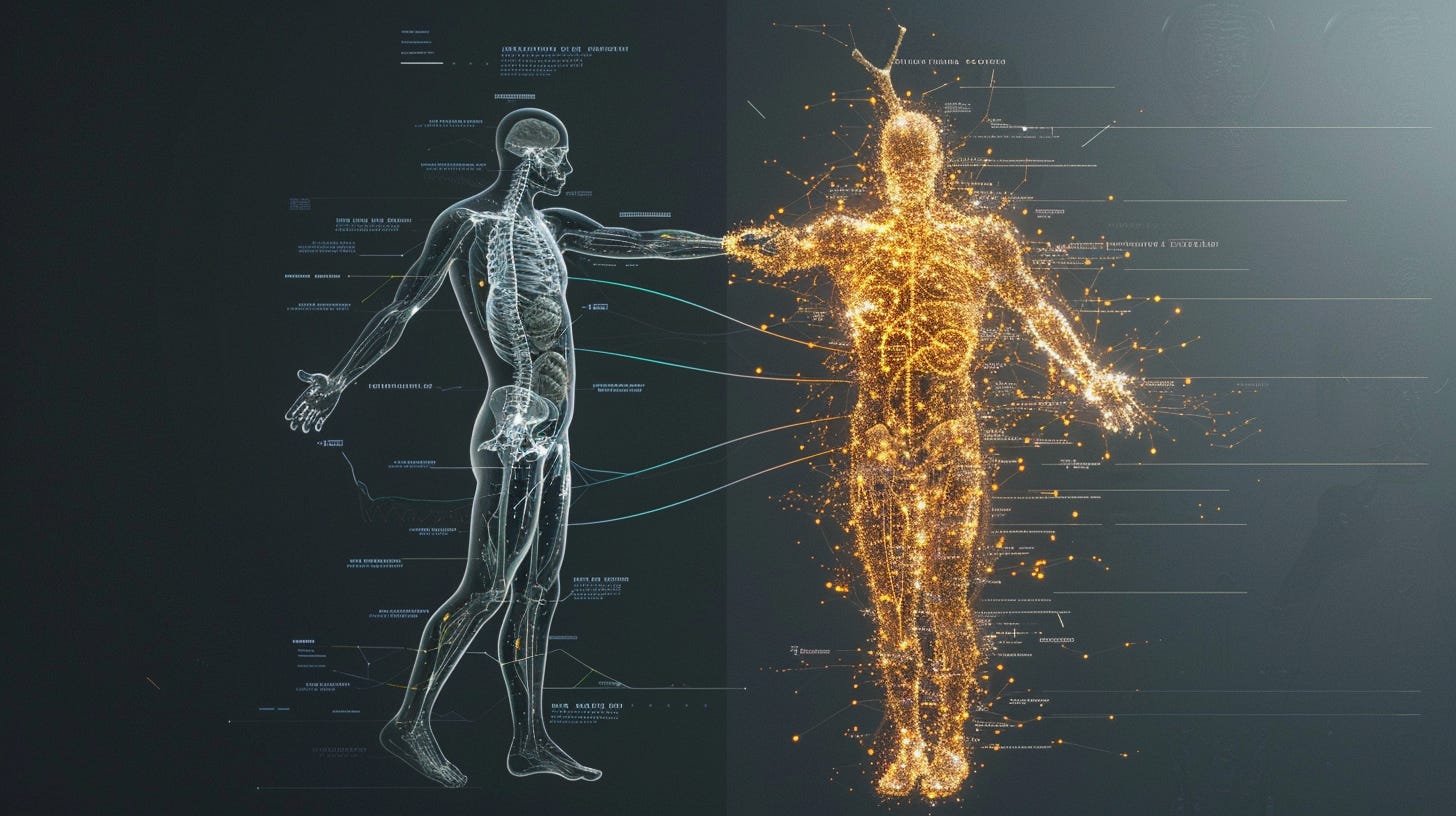
The average cell in your body is younger than you are. Your skin replaces itself in weeks, your gut lining in days, and even your bones are in a state of constant, fluid remodeling. You have been told you are a machine, a static object that accumulates mileage, but the data suggests something far more radical: you are not a ‘thing’ at all, but a continuous, self-organizing process in dialogue with everything around you.
I had been trained to see the body as a machine with parts. A machine that wears down over time. A machine that required repair or replacement of parts.
Health(v.) is a reader-supported publication. To receive new posts and support my work, consider becoming a free or paid subscriber.
Then, as a surgeon, I was taught to isolate problems, cut away the diseased part, and fix the broken mechanism. If the gallbladder was inflamed, we removed it. If the artery was blocked, we bypassed it. Every problem had a location, and every location had a solution. This was the elegant machinery of Evidence-Based Medicine, and I believed in it completely.
But one afternoon, something cracked. A surgeon in the surgical lounge was commenting on a gastric bypass surgery that was on the schedule and said, “Why can’t people understand simple math, calories in minus calories out, and just lose the weight, it’s that simple.” Yet knew that is not that simple. Why is it that a simple matter of math would be incorrect? The human system is not a machine, and almost nothing in it is linear.
That moment began a journey that would take me from allopathic medicine through functional medicine, genetics, epigenetics, lifestyle medicine, and finally into the emerging field of systems medicine. It was a journey from mechanic to the gardener. And it is a journey, I believe, medicine itself must now take.
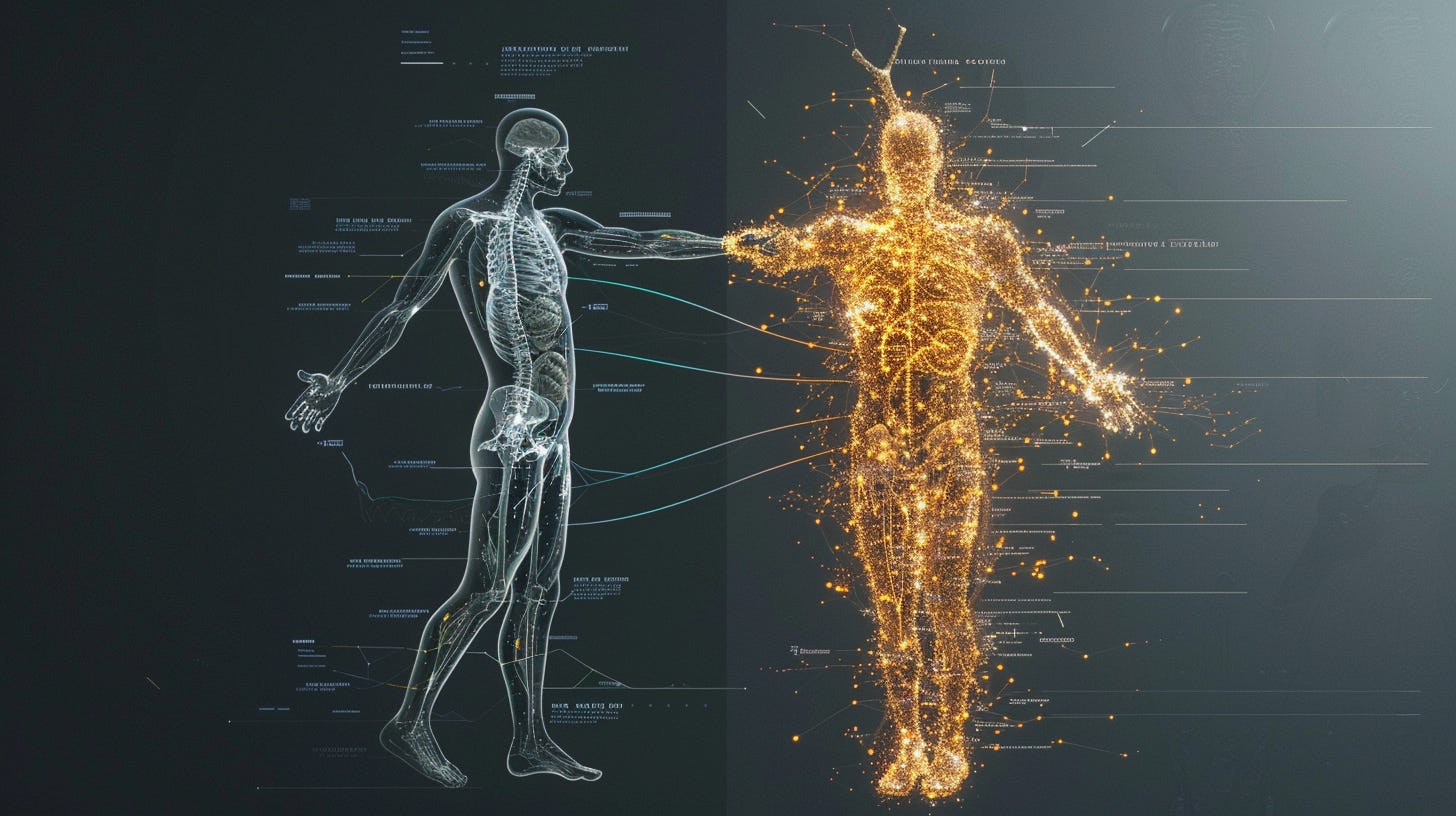
The Reductionist Illusion
For three hundred years, Western medicine has operated on a metaphor so pervasive that we have forgotten it is a metaphor at all. The body, we were told, is a machine.
This idea has roots in the philosophy of René Descartes and the physics of Isaac Newton. In the mechanistic worldview, the universe operates like a great clock. To understand the clock, you take it apart. You study each gear, each spring, each escapement in isolation. The whole is simply the sum of its parts, and any malfunction can be traced to a single broken component.
Applied to medicine, this became the foundation of modern clinical practice. Disease is a broken part. The doctor is the mechanic. Diagnosis means identifying which gear has failed. Treatment means repairing or replacing it. If cholesterol is high, lower it with a statin. If blood pressure is elevated, reduce it with an antihypertensive. If a tumor appears, cut it out.
This model is miraculous for certain problems. If you break your leg, you want a mechanic. If you have appendicitis, you want someone who knows how to remove the offending part. For acute, single-cause conditions, reductionism is elegant and effective.
But here is what I came to understand, slowly and then all at once: most of what we suffer from in the modern world is not a broken part. It is a disrupted relationship.
Diabetes is not a pancreas problem. It is a relationship problem involving insulin, glucose, inflammation, cortisol, gut bacteria, liver function, muscle metabolism, sleep patterns, stress hormones, and dozens of other variables in constant conversation with each other.
Treating it by adding more insulin is like trying to fix a broken marriage by having one partner shout louder.
Depression is not a serotonin deficiency. It is an emergent state arising from the interplay of neurotransmitter balance, gut-brain signaling, inflammatory status, hormonal rhythms, social connection, sleep architecture, and meaning-making.
Treating it with a pill that adjusts one neurotransmitter is like trying to heal a dying forest by painting the leaves green.
The chronic diseases that define our era exist not in organs but in networks. They emerge not from single failures but from cascading disruptions across multiple systems. And they cannot be understood, much less healed, by the reductionist model that still dominates medical education and practice.
The First Steps Away
My disillusionment with reductionist medicine did not lead immediately to clarity. First, it led to functional medicine.
In the early 2000s, I discovered this approach and felt the rush of someone who had found their tribe. Here, practitioners were asking “why” instead of “what.” Here, clinicians were looking upstream for a root cause rather than only downstream at symptoms. Here was medicine that acknowledged the whole person.
For years, I practiced enthusiastically in this space. I ordered comprehensive lab panels. I prescribed supplements instead of pharmaceuticals. I talked to patients about their diets, their stress, and their sleep. I felt certain I had escaped the mechanistic trap.
But gradually, a familiar discomfort returned. I noticed that functional medicine, for all its holistic language, often operated with the same underlying logic as conventional medicine. Low B12? Supplement B12. Elevated cortisol? Take adaptogenic herbs. Leaky gut? Here are the specific protocols.
The approach was certainly more natural. The treatments were often gentler. But the thinking was still linear: identify the abnormal marker, apply the corresponding intervention. It was the same reductionism wearing different clothes, swapping pills for powders while leaving the fundamental paradigm unchanged.
I had traded one set of gears for another without questioning whether the body was a machine at all.
The Turning Point: When Genes Learned to Listen
The real shift began in 2007, when I started studying genetics in depth. The Human Genome Project had been completed a few years earlier, and there was enormous excitement about what our genetic blueprint would reveal. The hope was that we would find the genes for heart disease, cancer, and depression. Once identified, these could become targets for intervention. The reductionist model would finally reach its apotheosis: genes as the ultimate gears, deterministically producing health or disease.
But the data told a different story. The large genome-wide association studies kept finding that common diseases were associated with hundreds or thousands of genetic variants, each contributing only a tiny fraction of risk. There was no gene for diabetes. There was no gene for heart disease. There was, instead, a vast network of genetic influences interacting with each other and with environmental factors in ways that defied simple prediction.
This was humbling, but the true revolution came three years later when I encountered epigenetics.
In 2010, I began reading the emerging research on how genes are regulated, and everything I thought I knew about biology began to reorganize itself. Epigenetics revealed that our genes are not static blueprints but dynamic, responsive elements in an ongoing conversation with our environment. The same DNA sequence could be expressed or silenced based on chemical modifications to the genetic material, modifications shaped by what we eat, how we sleep, whether we exercise, how much stress we experience, even what happened to our grandparents.
This was the inflection point. Not a broken gear that needed fixing. Not even a complex set of gears that needed coordinated adjustment. This was something far more alive: a responsive, adaptive, self-organizing system in constant dialogue with its environment.
The body was not a machine. It never had been. It was something closer to a forest.
The Forest Paradigm
Walk into an old-growth forest and your first impression might be of separate things: trees, shrubs, ferns, fungi, birds, insects. Individual organisms competing for resources. This is how we have been taught to see nature, and it is how we have been taught to see the body. Separate organs. Independent systems. Distinct diseases.
But dig beneath the soil and you will discover something that changes everything.
The roots of trees are connected to each other through vast underground networks of fungal threads called mycorrhizae. Scientists now call this the “Wood Wide Web.” Through these networks, trees share resources in ways that defy our notion of competition. A large oak can pump sugars to a struggling sapling in the shade. When one tree is attacked by beetles, it sends chemical warning signals in the air and through the fungal network, allowing neighboring trees to upregulate their immune defenses before the pests arrive. Mother trees recognize their own offspring and preferentially channel nutrients to them.
The forest is not a collection of individuals. It is a single, interconnected, living system.
Your body operates on identical principles. Consider the fascia, that continuous web of connective tissue that wraps every muscle, bone, nerve, and organ. For centuries, anatomists scraped it away to see the “important” structures underneath. They treated it as packing material. We now know it is more like the mycorrhizal network: a body-wide communication system that transmits mechanical signals, coordinates movement, and integrates information across the entire organism.
Consider the gut-brain axis. Your intestinal tract contains more neurons than your spinal cord and produces most of your body’s serotonin. The hundred trillion bacteria living there influence your mood, immune function, metabolism, and even food cravings. The gut and brain are in constant bidirectional communication via the vagus nerve, neurotransmitters, and inflammatory signals. They are not two systems. They are in one conversation.
Consider the heart, which we were taught to see as a simple pump. It turns out the heart contains its own neural network of over forty thousand neurons. It produces hormones that influence the brain. Its electromagnetic field can be measured several feet from the body and changes in response to emotional states. The heart is not subordinate to the brain. They are partners in an ongoing dialogue.
In a forest, health is not the absence of disease in individual trees. It is the integrity of relationships, the flow of nutrients, the balance of species, the resilience of the whole system. Disturb one relationship and ripples spread throughout.
In your body, the same principle holds. Health is not the normalization of individual biomarkers. It is the coherence of communication between systems. Disease emerges not from broken parts but from disrupted networks.
The Complexity Trap
If you are beginning to feel overwhelmed, you are in good company. So were the policymakers who commissioned the UK’s Foresight study on obesity in 2007.
For decades, obesity had been treated as a simple problem with a simple solution. The body is a machine that obeys thermodynamics. Calories in, calories out. Eat less, move more. The solution was willpower; the failure was individual.
But the obesity rates kept climbing despite all the education campaigns and dietary guidelines. So the government commissioned researchers to map the actual system driving the epidemic. The result was the Obesity System Map, a visual representation of 108 variables connected by over 300 feedback loops.
The map showed that obesity is not about willpower. It is about the interplay of genetics, psychology, food production, urban design, economic incentives, stress, sleep, gut bacteria, and dozens of other factors in complex feedback relationships. An intervention in one area might be amplified or dampened by effects elsewhere in the system. Simple solutions produced unintended consequences.
The map was accurate. It was honest. And it was immediately dubbed the “Spaghetti Diagram” and dismissed as impractical. Policymakers could not figure out what to do with it. It was complexity without a compass.
I experienced my own version of this paralysis when I moved into lifestyle medicine. Armed with my new understanding of epigenetics and systems thinking, I tried to implement a truly holistic approach. I collected data on nutrition, sleep, stress, movement, relationships, environment, and genetics. I tried to see the connections, to map the networks, to understand each patient as a complex adaptive system.
And I drowned.
The human mind, it turns out, cannot hold more than a few variables in working memory at once. The relationships between dozens of factors, the feedback loops and cascading effects, the way an intervention in one area propagates through the system over time: these exceed our cognitive capacity. I had the right paradigm, but no way to operationalize it.
I understood that the body was a forest. I just could not see the forest for the trees.
The Age of Navigation
We are living through a transition that future historians may regard as one of the most significant in the history of medicine. The computational power that has transformed every other domain of human activity is finally being applied to the study of biological complexity. The spaghetti diagram is becoming navigable.
Artificial intelligence, specifically the class of algorithms known as graph neural networks, can do what the human mind cannot. They can hold thousands of variables simultaneously. They can detect patterns across multiple biological layers. They can model feedback loops and predict cascading effects. They can identify the “driver nodes” in a complex network, the leverage points where intervention produces the greatest systemic change.
At the same time, our ability to measure the body has exploded. We can now characterize human biology at multiple scales simultaneously: genomics revealing the genetic blueprint, transcriptomics showing which genes are being expressed, proteomics mapping the proteins doing the work, metabolomics capturing the real-time chemistry of metabolism, microbiomics analyzing the trillions of bacteria that influence every system. This multi-dimensional data, once impossible to integrate, becomes coherent in the hands of AI.
The emergence of the “digital twin” represents the culmination of this convergence. Imagine a dynamic, continuously updated model of your specific biology. Not a static snapshot but a living simulation, fed by real-time data from wearable sensors, updated with each blood test and health measurement. A model sophisticated enough to predict how your system will respond to different interventions before you try them.
This is not science fiction. Researchers at institutions like the Institute for Systems Biology have already demonstrated the feasibility. Longitudinal studies have identified “transition signals,” changes in blood protein networks that occur years before the clinical onset of diseases like cancer or diabetes. We can now see the forest beginning to sicken before any individual tree shows symptoms.
The vision is called P4 Medicine: Predictive, Preventive, Personalized, and Participatory. Predictive because we can forecast disease trajectories before symptoms appear. Preventive because intervention during the transition state can prevent disease from ever manifesting. Personalized because the model is your model, reflecting your unique biological network. Participatory because you become a partner in the process, with access to your own data and the ability to see how your choices affect your system.
After years of knowing the paradigm but lacking the tools, I can finally see a path forward. The forest is still complex. But now we have a compass.
The Ecology of Health
What does all this mean for how we should think about our own health?
First, it means letting go of the idea that we are broken machines waiting to be fixed. The body is not a car that accumulates mileage until parts wear out. It is a living system in constant renewal, capable of regeneration and resilience when the conditions are right. The average cell in your body is younger than you are. Your skin replaces itself every few weeks. Your intestinal lining renews every few days. Even your bones are continuously remodeling. You are not a thing. You are a process.
Second, it means shifting attention from parts to relationships. The relevant question is not “Is my cholesterol number good?” but “How are my metabolic systems communicating?” Not “Is my serotonin level normal?” but “What is the state of the conversation between my gut, my brain, my immune system, and my hormones?” Not “What is wrong with this organ?” but “Where is the network disrupted?”
Third, it means understanding that your body responds to its environment as a forest responds to its climate. The epidemic of chronic disease we face is not primarily a story of individual failure. It is a story of biological systems evolved for one environment now struggling in another. Our genes expect whole foods; we feed them processed ones. Our circadian rhythms expect natural light cycles; we bathe in blue light until midnight. Our immune systems expect exposure to diverse microbes; we sterilize our surroundings. Our nervous systems expect periods of challenge followed by recovery; we marinate in chronic, low-grade stress without resolution.
The forest is not broken. It is responding to conditions that do not support its thriving.
Fourth, it means embracing the principle that small, consistent, system-wide support often matters more than dramatic interventions targeting a single factor. In a forest, you do not restore health by focusing obsessively on one species. You improve the soil. You restore water cycles. You reintroduce missing elements of biodiversity. You remove sources of ongoing damage. You create conditions in which the system's natural resilience can express itself.
In your body, the analogous practices are often surprisingly simple. Sleep that aligns with circadian rhythms. Food that your biology recognizes. Movement that challenges and then allows recovery. Time in nature that exposes you to the microbial and electromagnetic environments your body is accustomed to. Connection with others that satisfies your social biology. Meaning that gives your stress response something to organize around.
None of these targets a single biomarker. All of them support the network.
The Return to Wholeness
There is a peculiar irony in this journey. I began as a surgeon, trained in the most interventionist branch of the most reductionist medicine ever practiced. I learned to see the body as territory to be invaded, problems to be excised, mechanisms to be repaired.
The path through functional medicine, genetics, epigenetics, and systems biology has led me somewhere unexpected. Not to more sophisticated interventions but to a recovery of ancient wisdom in modern language.
Every traditional healing system understood the body as an interconnected whole. Chinese medicine mapped the flow of qi through meridians linking every organ. Ayurveda saw health as the balance of doshas influenced by food, climate, season, and constitution. Indigenous traditions around the world recognized the connection between human health and the health of the land, the waters, and the community.
We dismissed these perspectives as pre-scientific, as mystical thinking incompatible with rigorous medicine. But what systems biology is revealing, what artificial intelligence is now making visible, is that these traditions were pointing at something real. They were describing networks and relationships, feedback loops and emergent properties, using the language available to them.
The forest metaphor itself appears across cultures and centuries. The Kabbalistic tradition describes the human being as a microcosm of the Tree of Life. Buddhist texts speak of interbeing, the recognition that nothing exists independently of its relationships to everything else. Indigenous wisdom traditions consistently treat healing as a restoration of right relationship, not just within the body but between the person, the community, and the land.
What we are building with systems medicine is not a rejection of this wisdom but a translation of it into the language of contemporary science. The tools are new. The insight is ancient.
A New Beginning
I still remember that afternoon in the library, staring at the diagram that had begun to feel false. The neat boxes, the separate colors, the polite dotted lines between systems that were in constant, dynamic, intimate communication.
If I could speak to my younger self, I would say: Trust that intuition. The map is wrong. But keep following the path, because you will eventually find better maps.
We are at the beginning of a revolution in how we understand health and disease. The tools of artificial intelligence and multi-omics are finally giving us the capacity to see the body as the complex, adaptive, self-organizing system it has always been. The Spaghetti Diagram is becoming a navigational chart. The forest is becoming comprehensible.
This does not mean that conventional medicine should be abandoned. When you break a bone, you still want it set properly. When you have a life-threatening infection, you still want antibiotics. The machine model works for machine problems.
But for the chronic conditions that define our era, for the optimization of health rather than merely the treatment of disease, for the question of how human beings can thrive, we need a different paradigm. We need to stop being mechanics and become gardeners. We need to stop fixing broken parts and start restoring disrupted relationships. We need to stop treating the body as a factory and recognize it as an ecosystem.
You are not a machine. You never were.
You are a forest.
And forests, given the right conditions, know how to heal themselves.
Health(v.) is a reader-supported publication. To receive new posts and support my work, consider becoming a free or paid subscriber.