
The morning light arrives slowly, softly illuminating the trees before finding the earth below.
Birdsong moves through the branches. A gentle breeze stirs the leaves. Beneath my feet, the ground is alive with unseen organisms, participating in relationships I do not fully understand.
Thanks for reading LoveHealth! Subscribe for free to receive new posts and support my work.
I notice my breath.
An inhale. An exhale.
My heart responds to its rhythm. My nervous system adjusts. My body moves through a world that simultaneously shapes me as I shape it.
Nothing is independent. Everything interconnected.
The trees exchange gases with the atmosphere. The soil nourishes the plants. The birds respond to light, temperature, and one another. My own physiology responds to it all.
There is no obvious boundary where the health of the environment ends and my health begins.
I find myself wondering whether this is something longevity science is beginning to rediscover.
Not simply how to keep a human body alive for more years, but how the relationships sustaining life contribute to its capacity to flourish.
What the Longevity Rankings Reveal
Recently, I came across a fascinating project called Longevity Interventions, Ranked and Scored.
The creators assembled research on 92 interventions, drawing from hundreds of scientific studies, guidelines, and databases. Each intervention receives a score based on the strength of human evidence, magnitude of benefit, safety, accessibility, and consistency of findings.
The rankings offer an interesting window into where longevity science stands today.
Near the top are familiar practices and preventive measures: avoiding tobacco and alcohol, aerobic exercise, walking, blood pressure management, lowering elevated cardiovascular risk, resistance training, and nourishing dietary patterns.
Farther down are many of the interventions receiving considerable attention in the longevity marketplace: emerging pharmaceuticals, supplements, peptides, and experimental approaches to biological aging.
There is an important distinction here.
A lower ranking does not necessarily mean an intervention has little value. It may mean the evidence is preliminary, the benefits are limited to particular populations, or long-term human outcomes remain uncertain.
Likewise, a high score does not indicate how many additional years an individual will live.
Yet, a pattern emerges.
Some of the most powerful tools for supporting a longer life are remarkably accessible, deeply familiar, and already woven into the experience of being human.
Movement. Nourishment. Rest. Connection.
The ordinary rhythms of living.
What intrigues me is not simply that these practices rank highly.
It is that we continue to study them largely as separate interventions, while the human being who experiences them is anything but separate.
The Science Is Speaking. Are We Hearing the Whole Story?
Consider movement.
A 2023 systematic review and dose-response meta-analysis examined evidence from 94 cohorts involving more than 30 million participants.
The researchers found that greater physical activity was associated with lower risks of premature mortality, cardiovascular disease, and several cancers. Much of the benefit occurred when people moved from very low activity levels toward modest amounts of regular movement.
This is encouraging.
We do not need extraordinary athletic performance to experience meaningful health benefits.
We need more opportunities to move.
This finding invites a broader question.
What really happens when we take a walk?
From a biological perspective, muscles contract, circulation increases, energy metabolism changes, and the cardiovascular and respiratory systems respond.
What happens as we walk in nature?
Sunlight reaches our eyes, sending information to our circadian system. Our attention moves toward the landscape to open spaciousness beyond our normally focused computer vision. We encounter trees, birds, and the subtle sensory qualities of the environment.
Perhaps we walk with someone we love.
Conversation unfolds. We laugh. We listen. We experience companionship and communion.
Perhaps the walk creates space for contempation and reflection, allowing a difficult experience to settle into a wider perspective.
One walk.
Multiple systems participating.
The research establishes meaningful associations between physical activity and health outcomes. It does not establish that every dimension of this experience adds longevity benefits.
This reveals a limitation in how we organize our questions.
When we measure an intervention in isolation, we may overlook the relationships through which it becomes part of a life.
This is no criticism of scientific reductionism. Isolating the parts provides useful knowledge.
It is an invitation to enhance that knowledge with systems thinking.
Because understanding the individual notes does not necessarily reveal the music.
The Biology of Belonging
Among the findings in longevity research, one continues to draw my curiosity.
Human relationships matter.
In a landmark meta-analysis published in PLOS Medicine, researchers examined 148 studies involving 308,849 participants.
People with strong social relationships demonstrate an approximately 50% higher odds of survival during the study periods compared with those with little to no social relationships.
This was an observational finding, not proof that social connection alone caused the difference.
Nevertheless, the consistency and magnitude of the association are remarkable.
We have long recognized that relationships shape our psychological experience.
Increasingly, research explores how social connection relates to stress physiology, immune function, cardiovascular health, health behaviors, and our capacity to navigate adversity.
Consider what happens when someone we trust places a hand on our shoulder.
Or when we hear the voice of a loved one.
Or when we sit quietly beside another person without needing to speak.
Our experience of the moment changes.
Breathing softens. Muscle tension shifts. Attention opens into spaciousness.
These responses are all unique to the individual, and their physiological effects depend on context, history, and perceived safety.
They remind us that our bodies do not exist outside our relationships.
Love is not merely a sentiment layered upon biology.
It is an experience expressed through biology, psychology, behavior, and relationship.
This is one reason we chose to explore LoveHealth as a verb.
To love and to health are not simply conditions we possess.
They are ways of participating in life.
And participation changes us.
Six Domains, One Living System
For more than two decades, our work has been shaped by a growing recognition that health cannot be adequately understood through biological mechanisms alone.
This inspired us to develop Holistic Systems Health (HSH), a framework exploring six interconnected domains of human experience.
The Physical/Biological Domain includes the remarkable processes sustaining the body: cellular metabolism, cardiovascular function, immune activity, movement, sleep, nutrition, and the countless regulatory interactions occurring moment by moment.
The Psychological Domain encompasses awareness, perception, emotion, attention, memory, and the meanings we create from our experiences. Our interpretation of the world influences how we respond to it, just as our physiological state influences what we perceive.
The Social Domain recognizes that human beings develop, regulate, and flourish in relationship. Connection, belonging, intimacy, and community are not peripheral niceties. They are important aspects of human life that connects us.
The Environmental Domain brings us into relationship with the world that sustains us. Air, water, soil, light, biodiversity, built environments, and ecological conditions shape the possibilities for health. The health of the individual and the health of the planet are intimately connected.
The Spiritual Domain explores meaning, purpose, wonder, and our experience of belonging to something greater than the individual self. It includes the ways we encounter mystery, navigate mortality, and devote ourselves to what we hold sacred.
The Energetic Domain invites exploration of the body’s electrical activity, physiological rhythms, and patterns of coordination, alongside emerging questions about biological signaling. Some of these processes are well established and measurable; other proposed energetic mechanisms remain scientifically unresolved.
These domains are not six separate silos.
They are six lenses through which we can observe one interconnected living system.
Each domain has differing evidence for extending human lifespan.
They help us recognize that health is experienced through relationships among biological processes, personal experience, social conditions, and the larger world.
A change in one domain influences all the others.
Sleep can alter emotional regulation. Psychological stress can affect cardiovascular physiology. Social conditions can shape access to nourishing food and safe environments. Environmental exposures can influence biological function.
These relationships are dynamic, reciprocal, and ever changing.
Which brings us to something that has become increasingly central to our understanding of systems wide coherence.
The Breath.
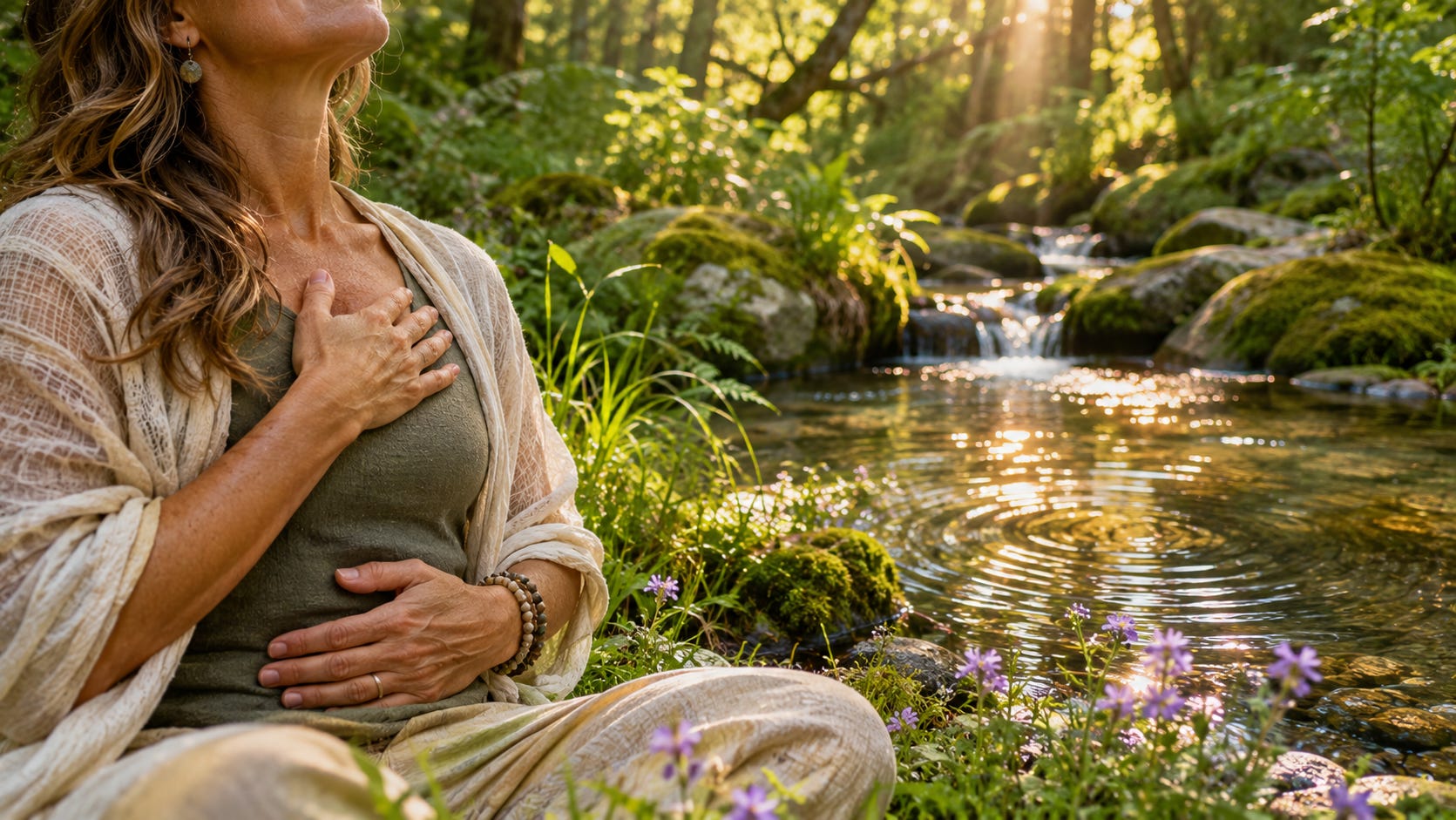
Breath: The Rhythm that Connects the Domains
For years, we explored the six domains of HSH, recognizing their interdependence while searching for a more complete understanding of how they relate.
Over time, breath emerged as an integrator.
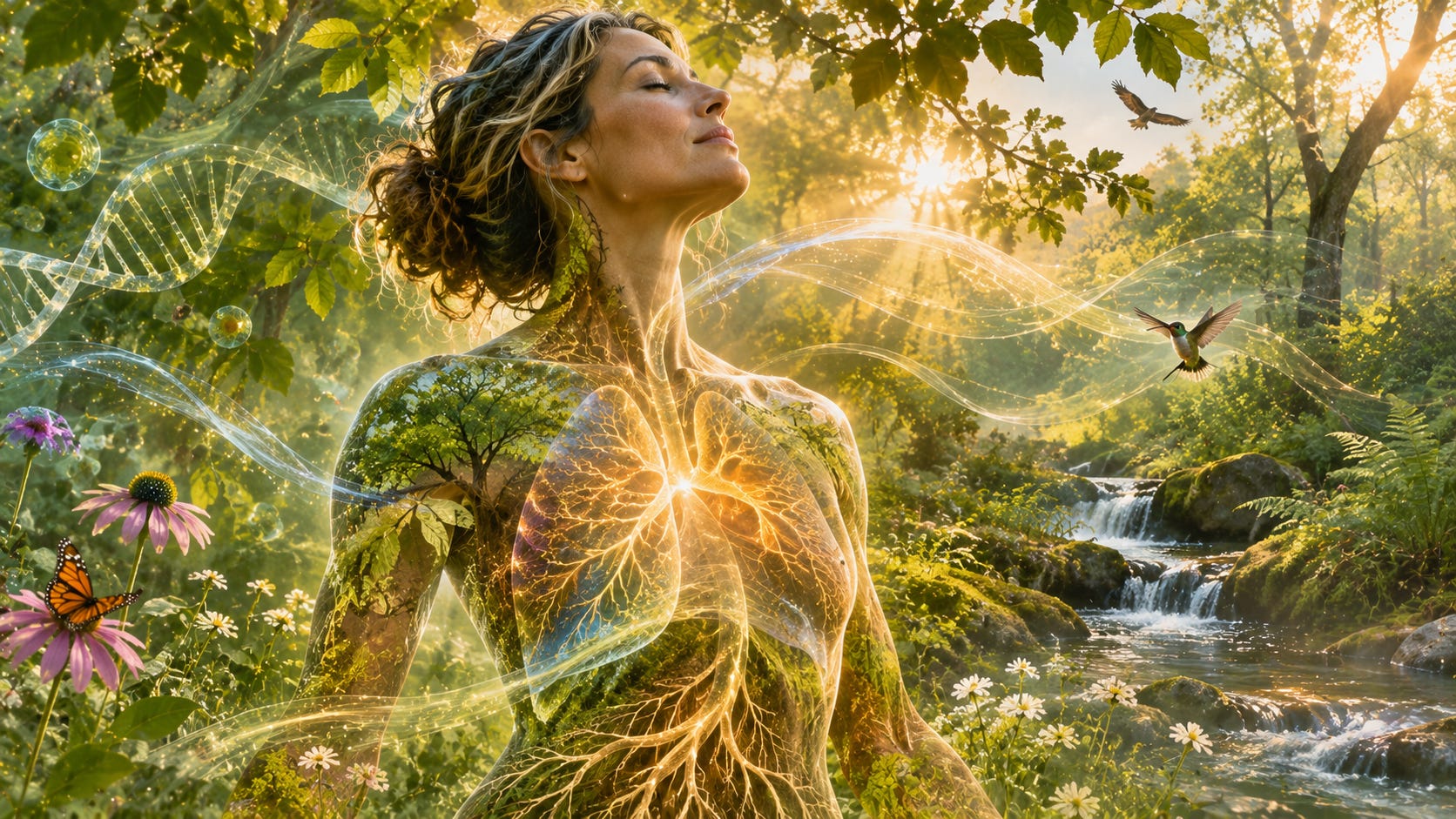
Every breath is a connection between the human system and the environment.
Oxygen enters. Carbon dioxide leaves. Gas exchange supports cellular metabolism, while carbon dioxide participates in the regulation of blood pH and respiratory drive.
The movement of the diaphragm changes pressures within the chest and abdomen, influencing venous return and cardiovascular dynamics.
Breathing rhythms interact with heart rate through respiratory sinus arrhythmia and promote blood pressure regulation through baroreflex mechanisms.
These relationships help explain why paced breathing can influence heart rate variability and aspects of autonomic regulation.
Breath is not only biological.
Notice what happens when we are startled.
Or when we laugh.
When we get angry or cry.
When we are deeply absorbed in beauty.
When we speak words of love.
Our breathing changes based on what we experience.
When we experience love and connection we respond in kind; our breath and heart rate slow down and synchronize. The system expands; we experience an internal state of coherence which feels interconnected with all of life.
When we experience challenges or conflicts our breath becomes rapid, shallow and subsequently our heart rate becomes chaotic. Perhaps we feel intense emotion such as anger, anxiety or fear. The system contracts and we react in real time.
Executive skills governed by the prefrontal cortex are no longer accessible and our ability to remain rational slips away. We perceive life through the amygdala and may be irrational until we calm down, slow our breath and decrease the activation.
Breathing is the one human system that is both voluntary and involuntary. It offers a way to participate in processes that usually unfold beyond conscious awareness.
This is why we have come to understand breath as a vertical integrator within HSH.
It provides a connection across the biological, psychological, social, environmental, spiritual, and energetic dimensions of life.
There is growing research on slow-paced resonance-frequency breathing, including its effects on heart rate variability, baroreflex function, and certain measures of stress regulation.
What remains to be established is whether these changes translate into longer human health span.
Perhaps breath’s greatest immediate contribution is not another longevity score.
Perhaps it is the opportunity to become aware of the relationships already taking place within us.
A rhythm we can observe.
A rhythm we can influence.
A rhythm connecting our internal experience with the living world.
From Optimization to Participation
Much of the modern longevity conversation revolves around optimization.
We measure biological age, glucose regulation, cardiovascular fitness, sleep architecture, inflammation, and an expanding collection of biomarkers.
These measurements can be enormously valuable.
They can help identify risks, guide treatment, evaluate interventions, and reveal physiological changes long before symptoms appear.
Yet I wonder what happens when optimization becomes the primary relationship we have with our own bodies.
When every meal becomes a metabolic calculation.
Every walk becomes a step count.
Every night of sleep becomes a score.
Measurement can deepen understanding.
Yet measurement is not the same as experience.
A beautiful meal shared with friends may nourish us through its nutrients, but also through conversation, pleasure, cultural memory, and belonging.
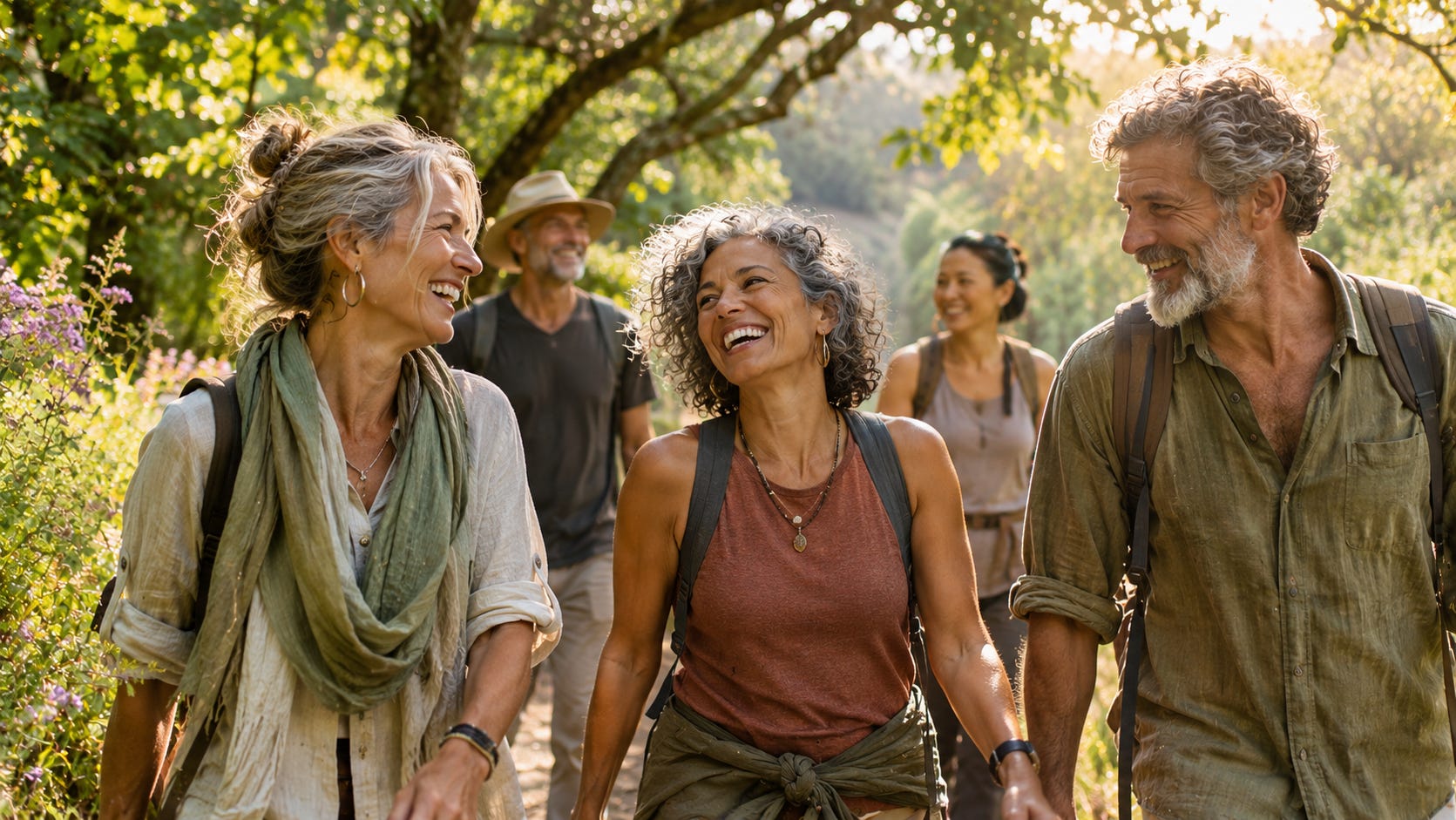
A walk in the forest may improve cardiovascular health while awakening curiosity and a deeper sense of relationship with the natural world.
A quiet moment of stillness may not produce a measurable change in biological age, yet it may transform how we experience the hours that follow.
These experiences need not compete with scientific measurement.
They simply remind us that life is more expansive than the variables we currently know how to quantify.
There is also another aspect worth considering.
The ability to engage in health-supporting practices is not equally distributed.
Access to safe places to walk, nourishing food, clean air, restorative sleep, healthcare, and supportive relationships is shaped by social and environmental conditions.
Longevity is influenced by the systems in which we live.
A truly holistic understanding of longevity must therefore extend beyond personal optimization into the health of communities, ecosystems, and the conditions that allow life to flourish.
We cannot separate the future of human health from the future of the living world.
What If Wholeness Is Not Something We Achieve?
There is a subtle assumption woven through much of our cultural understanding of health.
That we begin as incomplete beings, and through sufficient effort, knowledge, or intervention, we might eventually arrive at wholeness.
What if wholeness is not a destination?
What if it is an inherent quality of being alive, sometimes obscured by the patterns and conditions through which life unfolds?
This does not mean that illness is imaginary, that suffering can be transcended through perspective, or that biological dysfunction does not require treatment.
It means that a person can remain profoundly whole while experiencing illness, disability, grief, or the changes that accompany aging.
A longer life does not automatically create a meaningful one.
And a life marked by illness does not necessarily lack vitality, love, or purpose.
Perhaps this is one of the deeper invitations emerging from longevity science.
As we become increasingly sophisticated in our ability to measure and influence the mechanisms of aging, we are also being invited to reconsider what those additional years are for.
More time to accomplish?
More time to accumulate?
Or more time to love, create, explore, contribute, and participate in the extraordinary unfolding of existence?
We can extend health span and deepen our experience of life.
Returning to the Living World
The afternoon sun is much lower in the sky.
The birds have shifted their songs as dusk approaches. Somewhere beneath the soil, roots and microorganisms continue their quiet exchanges.
I return my attention to the breath.
An inhale. An exhale.
A heart responding.
A body moving.
A human being in relationship with an infinitely larger living world.
Longevity science is helping us understand which interventions can reduce disease, preserve function, and extend life.
Holistic Systems Health invites us to explore the relationships among those interventions, the person experiencing them, and the world in which they unfold.
Perhaps the next frontier of longevity is not simply discovering more ways to intervene in the mechanisms of aging.
Perhaps it also involves understanding the conditions that allow life to remain adaptive, connected, and capable of renewal.
To simply remember how deeply our health is woven into the world around us.
What if the question is not only how many years we can add to life, but how much quality of life we can experience within those years?
An Invitation to Reflect
Where in your life do you experience the greatest sense of aliveness?
Is it in movement, in nature, in stillness, in meaningful work, or in the presence of someone you love?
What changes when we recognize that these experiences are not separate from our health, but part of the living system through which health unfolds?
We invite you to contemplate and share how your breath informs your health and wellbeing across the HSH six domains.
To LoveHealth(v) is to participate consciously in the relationships that inform health and sustain life.
Research & Further Exploration
Longevity evidence
Longevity Interventions, Ranked and Scored (November 2026). An independently assembled evidence-ranking resource evaluating interventions across evidence quality, benefit, safety, accessibility, and consistency. Its composite scores are not direct estimates of lifespan extension.
Garcia LMT et al. (2023). Non-occupational physical activity and risk of cardiovascular disease, cancer and mortality outcomes: A dose-response meta-analysis of large prospective studies. British Journal of Sports Medicine.
Holt-Lunstad J, Smith TB, Layton JB. (2010). Social Relationships and Mortality Risk: A Meta-analytic Review. PLOS Medicine.
Ekelund U et al. (2019). Dose-response associations between accelerometry measured physical activity and sedentary time and all-cause mortality. BMJ.
Physiological regulation
Heart Rate Variability in the Prediction of Mortality: A Systematic Review and Meta-analysis of Healthy and Patient Populations (2022). Neuroscience & Biobehavioral Reviews.
Thanks for reading LoveHealth! Subscribe for free to receive new posts and support my work.