Something has gone terribly wrong.
I don’t mean the obvious catastrophes. Not the climate or the economy or the fractured politics that occupy our headlines and our anxieties. I mean something more fundamental. Something that precedes and underlies all of these symptoms. We have forgotten what we are. We have forgotten our place in the great web of being. And this forgetting is destroying us from the inside out.
I’ve been thinking about this for months now, watching our five boys navigate a world that seems designed to disconnect them from everything that once made humans whole. From nature, from community, from their own interior silence, from the stars above their heads, from the ground beneath their feet. The more I look, the more I see us drifting into a kind of cosmic loneliness that no amount of technology or stimulation can fill.
And there is a way back.
We Are Learning to Fear the Living World
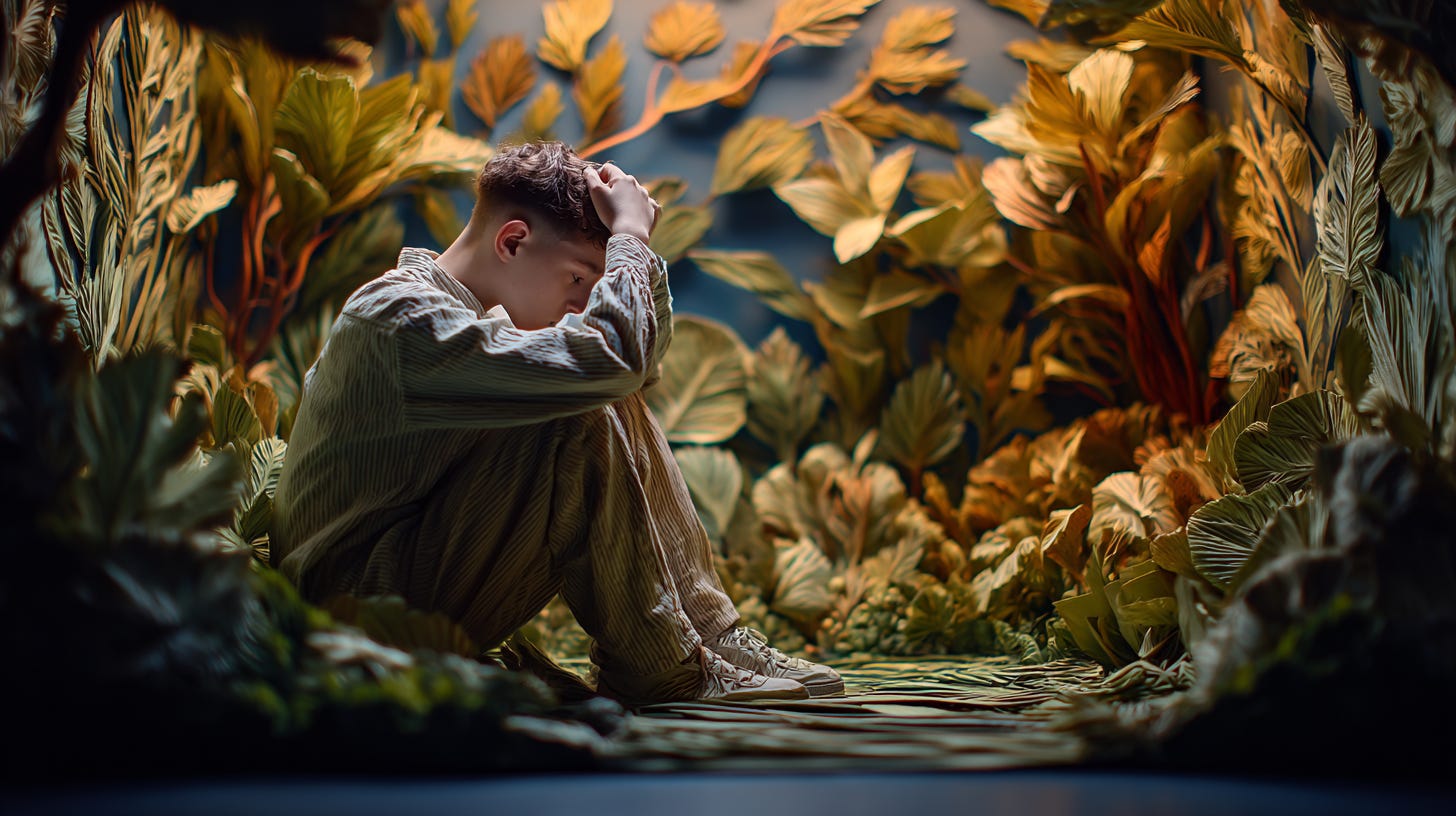
A systematic review published this week in Frontiers in Ecology and the Environment examined nearly 200 studies on what researchers call “biophobia”: the fear, dislike, or disgust of non-human life (nature). What they found should disturb anyone who still holds hope for our species’ future.
Biophobia is not merely the rational caution our ancestors evolved toward venomous snakes and large predators. It has metastasized into something far stranger. In developed societies, many people now report negative emotions toward nature itself. The gentle buzz of insects. The rustling presence of wildlife. The simple fact of being outdoors in an uncontrolled environment. For a growing number of us, the living world has become something to avoid rather than embrace.
The researchers describe what they call a “vicious cycle”: limited exposure to nature breeds fear of nature, which further limits exposure, which deepens the fear. And this cycle is accelerating. Social media amplifies stories of animal attacks. Urban design minimizes contact with anything wild. Children grow up in environments scrubbed clean of the creatures that shaped our very neurology.
Animal phobias now affect four to nine percent of the world’s population, with documented health consequences including chronic anxiety, heightened stress responses, and measurable physiological markers of fear. But the subtler cost may be greater. Biophobic individuals avoid natural areas. They support more aggressive wildlife culling. They lose access to what researchers have documented for decades: the profound healing that comes from contact with the living world.
The review’s most troubling finding is how little we understand about this phenomenon because our research is fragmented across disciplines that rarely speak to one another. Psychologists study clinical phobias. Environmental scientists study the conservation implications. Medical researchers measure the physiological stress responses. But no unified framework connects these fragments into a coherent picture.
This fragmentation mirrors something deeper. We have become unable to see ourselves as part of a whole. The very way we study our disconnection from nature reflects our disconnection from wholeness.
We Cannot Bear Our Own Silence
If our relationship with the external world of nature is fracturing, so too is our relationship with the internal world of consciousness.
In a study I often reference, psychologist Timothy Wilson brought participants into an empty room and asked them simply to sit alone with their thoughts for ten to twenty minutes. No phones. No books. No distractions. Just the mind meeting itself in silence.
Most people found this experience profoundly unpleasant. But then Wilson introduced a twist. He showed participants a button that would deliver a mild but uncomfortable electric shock. Before leaving them alone, he had each person press the button once, just to feel what it was like. Then he asked if they would pay money to avoid being shocked again. They said yes.
And yet, when left alone with nothing but their thoughts, sixty-seven percent of men and twenty-five percent of women chose to shock themselves rather than sit in silence.
We have become strangers to ourselves. The inner territory that every contemplative tradition has mapped and treasured, the quiet garden where insight blooms and integration happens, has become so unfamiliar that we prefer physical pain to its company.
This is not normal. This is not how humans have lived for the hundreds of thousands of years we wandered the earth before screens and schedules colonized our attention. Every indigenous culture, every wisdom tradition, every monastery and meditation hall understood that the capacity for productive solitude was essential to human flourishing.
And we have lost it. Not through some catastrophe but through a slow, almost imperceptible drift. The younger generation, immersed from birth in an environment of constant digital stimulation, has been particularly deprived of what researchers call “the constructive role of solitary experience.” They have little practice managing time alone productively. The muscle of inner attention, never exercised, has atrophied.