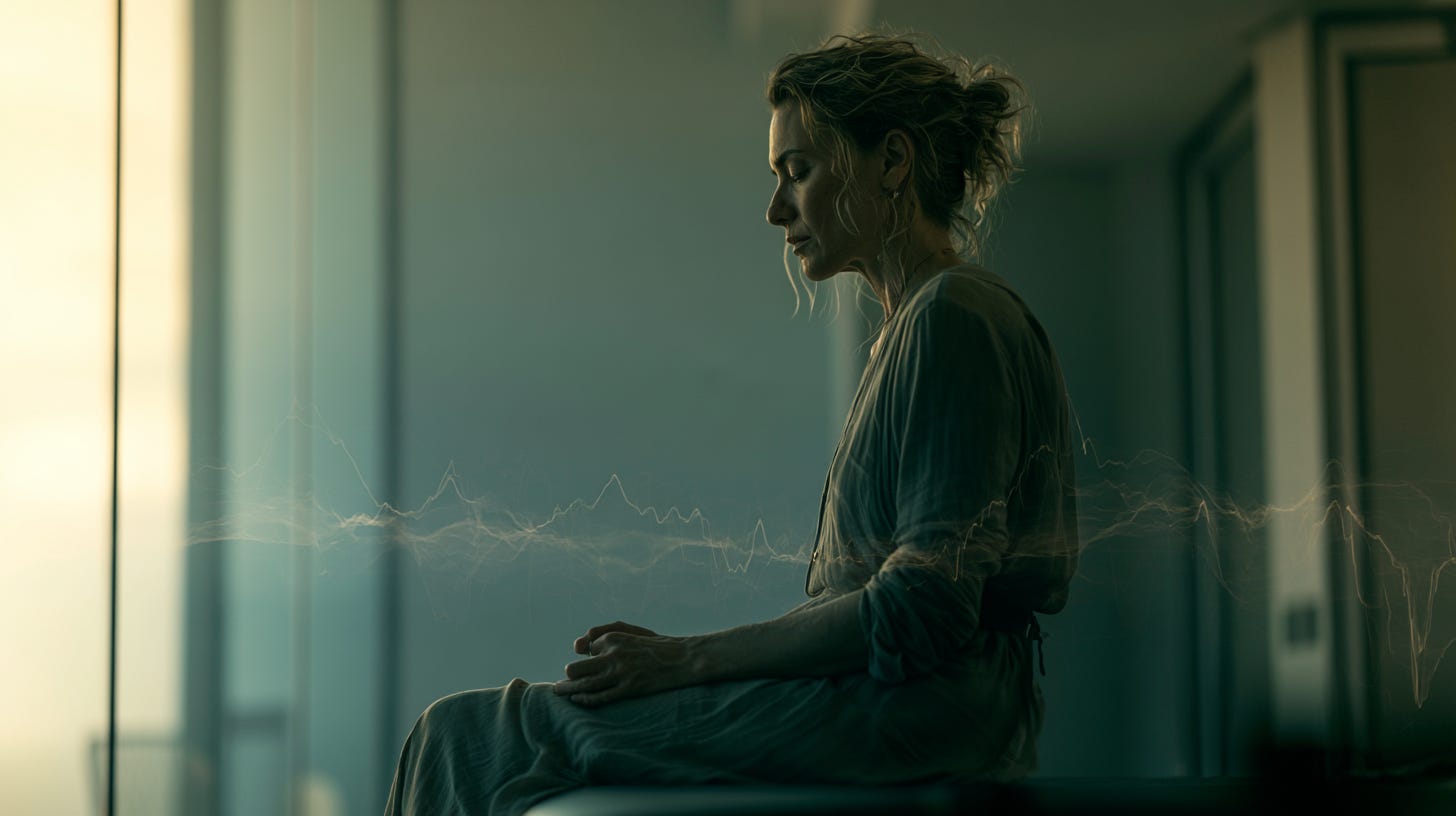
Writing in these final hours of the year, I want to share something that perhaps you haven’t heard lately: if you sense uncertainty or even fear of what’s coming in the New Year, that fear makes sense. If you lie awake at 3 a.m. with your heart racing, wondering what kind of world your children will inherit, there’s not something wrong with you. You are paying attention.
The uncertainty we face is real. It is not anxiety disorder. It is not catastrophizing. It is an appropriate response to a world on the edge of chaos.
Scholars now call what we’re living through a “polycrisis,” a convergence of challenges so interwoven they cannot be addressed in isolation. Climate systems crossing tipping points. Artificial intelligence reshaping the nature of human work and cognition. Geopolitical fractures are deepening. The economic ground that once felt stable now feels like a mild earthquake and we wait for what might be next.
I could fill pages with statistics. The World Economic Forum’s latest report places armed conflict and extreme weather at the top of global concerns. Scientists confirm we’ve crossed our first catastrophic climate tipping point with the functional extinction of warm-water coral reefs. A “Silicon Curtain” is descending between technological superpowers.
But you already feel these things in your body, don’t you? The headlines you scroll past because you cannot bear to read them. This "Poly or Metacrisis" of climate tipping points and shifting geopolitical sands is not a personal failure, but a genuine instability that our nervous system accurately detect. The low hum of dread we feel isn't just anxiety; it is the friction of a biological system waiting for an "all clear" signal that may never come. But what if this very instability, this pressure that keeps us awake, is not an assault to be survived, but a curriculum for becoming someone capable of meeting challenges we won’t even allow ourself to imagine?
I feel the low level dissonance in my nervous system and I invite you to sit with me in your own version of that feeling before I continue.
Because the path through uncertainty doesn’t begin with fixing or overcoming. It begins with acknowledgment. Until we can acknowledge the potential of coming challenges we cannot begin to access our powerful creativity to build the systems we will need as change continues at unprecedented speeds.
Honoring What the Body Already Knows
Here is what I’ve learned from decades of medical practice: fear is not our enemy. It is ancient intelligence trying to protect us. Our nervous system evolved over millions of years to detect threats and mobilize responses. When you feel afraid of the future, your body is doing exactly what it was designed to do.
The problem is not the fear itself. The problem is that we live in a world our ancestors never imagined. They faced lions and rival tribes, threats that were immediate, localized, and resolvable through action. Spot the danger in even the smallest creatures, fight or flee, survive to see another day.
What is being predicted for the polycrisis offers no such resolution. The threats are diffuse, global, and largely beyond individual control. There is no lion to fight, no clear direction to run. And yet our threat-detection systems remain perpetually activated, flooding our bodies with stress hormones that have nowhere to go.
This is why uncertainty feels so unbearable. It’s not that we’re weak. It’s that we’re running ancient software in a world it wasn’t designed for. Our body keeps waiting for the danger to pass so it can return to rest. But in a polycrisis, the danger never fully passes. The nervous system never gets the “all clear” signal it craves to know safety.
If you have been judging yourself for feeling fear, anxiety, or for your inability to simply “think positive” and move on, release that judgement with me now. There is not something wrong with you. You are a highly sensitive intelligence responding accurately to genuine instability.
The Hidden Cost of Resistance
Here is the paradox: the more we resist uncertainty, the more power it holds over us. When we tighten against the not-knowing, when we demand guarantees that cannot be given, when we exhaust ourselves trying to control what is beyond our capacity, we deplete the very resources we need to navigate what’s actually happening in our immediate lives.
I see this often. The chronic vigilance, the constant scanning for threats, the inability to rest even when rest is desperately needed. The body is locked in a permanent state of emergency, burning through its reserves, compromising immune function, cognitive clarity, and emotional resilience.
Neuroscience is unambiguous: when we remain in chronic stress, our prefrontal cortex goes offline. The capacities we need most, clear thinking, creative problem-solving, empathic connection, and the ability to see options and possibilities, become compromised. We become reactive rather than responsive. When stress takes over we see threats everywhere and solutions nowhere.
This is biology affecting the body, mind and soul. And it provides an opportunity to create a new relationship with uncertainty. Not because positive thinking will make the problems disappear, but because we cannot address real challenges from a state of perpetual overwhelm.
What If Uncertainty Could Be Something Else?
I want to offer you a possibility that I feel in the core of my being. This may feel counterintuitive, perhaps even offensive in its seeming naivety.
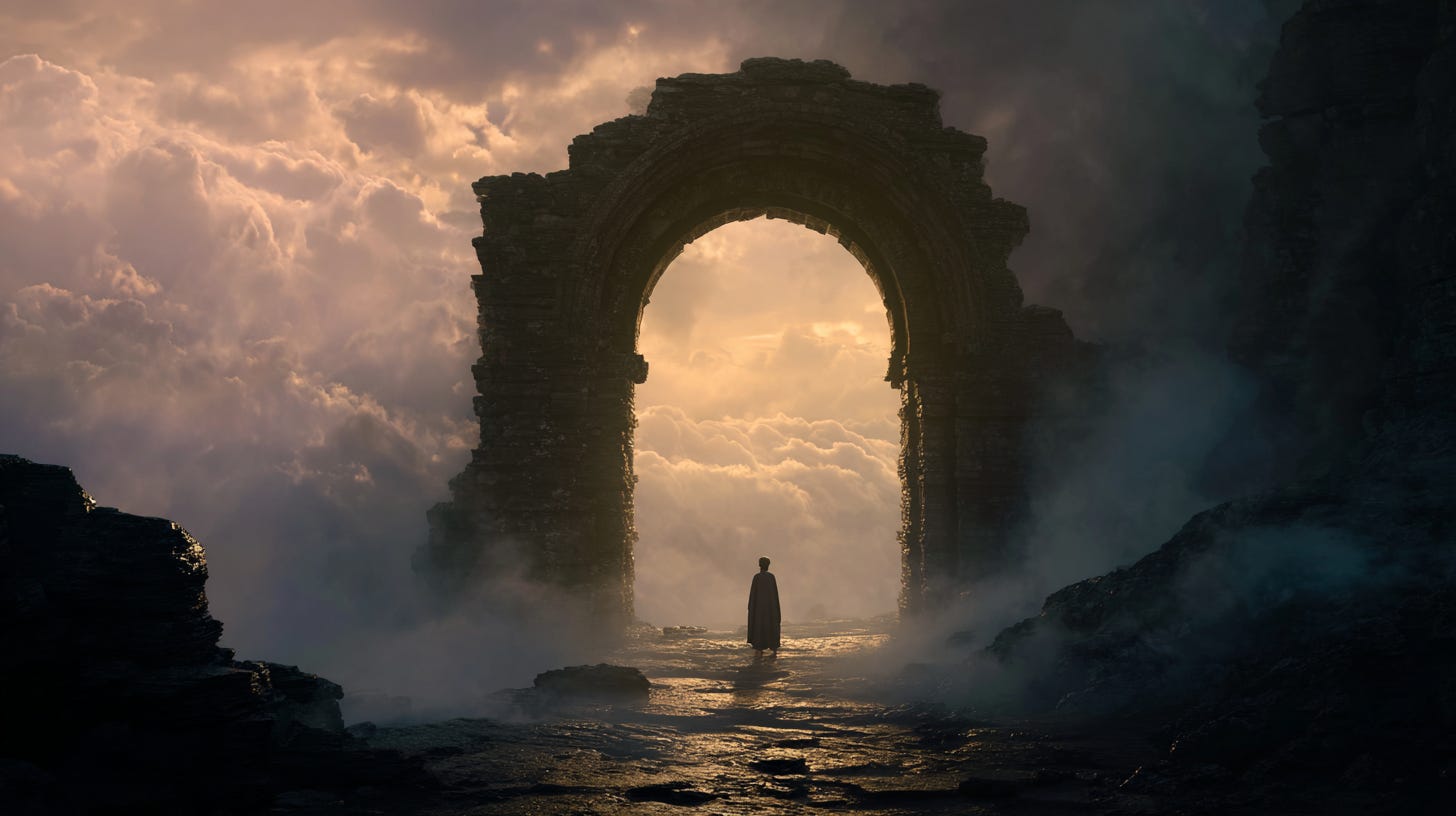
What if the very uncertainty that terrifies you could become, over time and with practice, a source of aliveness rather than dread?
I’m not asking you to believe this now or ever. I’m asking you to consider exploring it as a question through the lens of curiosity; to let it sit alongside your fear without demanding that either one disappear.
Consider: certainty and aliveness are not the same thing. In fact, they may be inversely related. The most “certain” states, complete predictability, total control, nothing ever changing, these are also the states we associate with stagnation, boredom, and a kind of living death. Meanwhile, the moments when we feel most vibrantly alive often involve risk, adventure, stepping into the unknown.
“The only way to make sense out of change is to plunge into it, move with it, and join the dance.” — Alan Watts
The problem is not uncertainty itself. The problem is unwanted uncertainty, change that feels imposed rather than chosen, vulnerability that feels like victimhood rather than adventure.
What if we could shift our relationship to the unknown, not by pretending it’s something other than what it is, but by discovering capacities within ourselves we didn’t know we had?
Growing Stronger Through What You Cannot Control
The philosopher Nassim Nicholas Taleb distinguishes between three ways of relating to volatility. Fragile systems break under stress. Resilient systems endure and return to baseline. But there is a third possibility he calls antifragility: systems that actually grow stronger through disorder.
Your bones work this way. Astronauts in zero gravity lose bone density because their skeletal systems lack the stress to adapt. Subject those same bones to appropriate challenge, and they grow denser and stronger. The stress is not a problem to be eliminated. It is information the system uses to optimize itself.
Your immune system works this way too. Children raised in overly sterile environments develop more allergies and autoimmune conditions than those exposed to appropriate microbial challenges. The body needs to encounter what it fears in order to develop the capacity to meet it.
What would it mean to approach the polycrisis not as an assault to be survived but as a curriculum for becoming? What if the very instability that frightens you is also the pressure that could forge you into someone capable of meeting challenges you cannot yet imagine?
This is not pretending that suffering is secretly good or that everything happens for a reason. It is simply recognizing that humans have always grown through difficulty, and that the capacity for such growth lives within us right now, waiting to be activated.
Finding the Depths Within the Storm
Here is a practice I return to when the surface of my life feels too turbulent to bear. Perhaps it will be useful to you. (Here is a link to a post I did a few months ago on this topic)
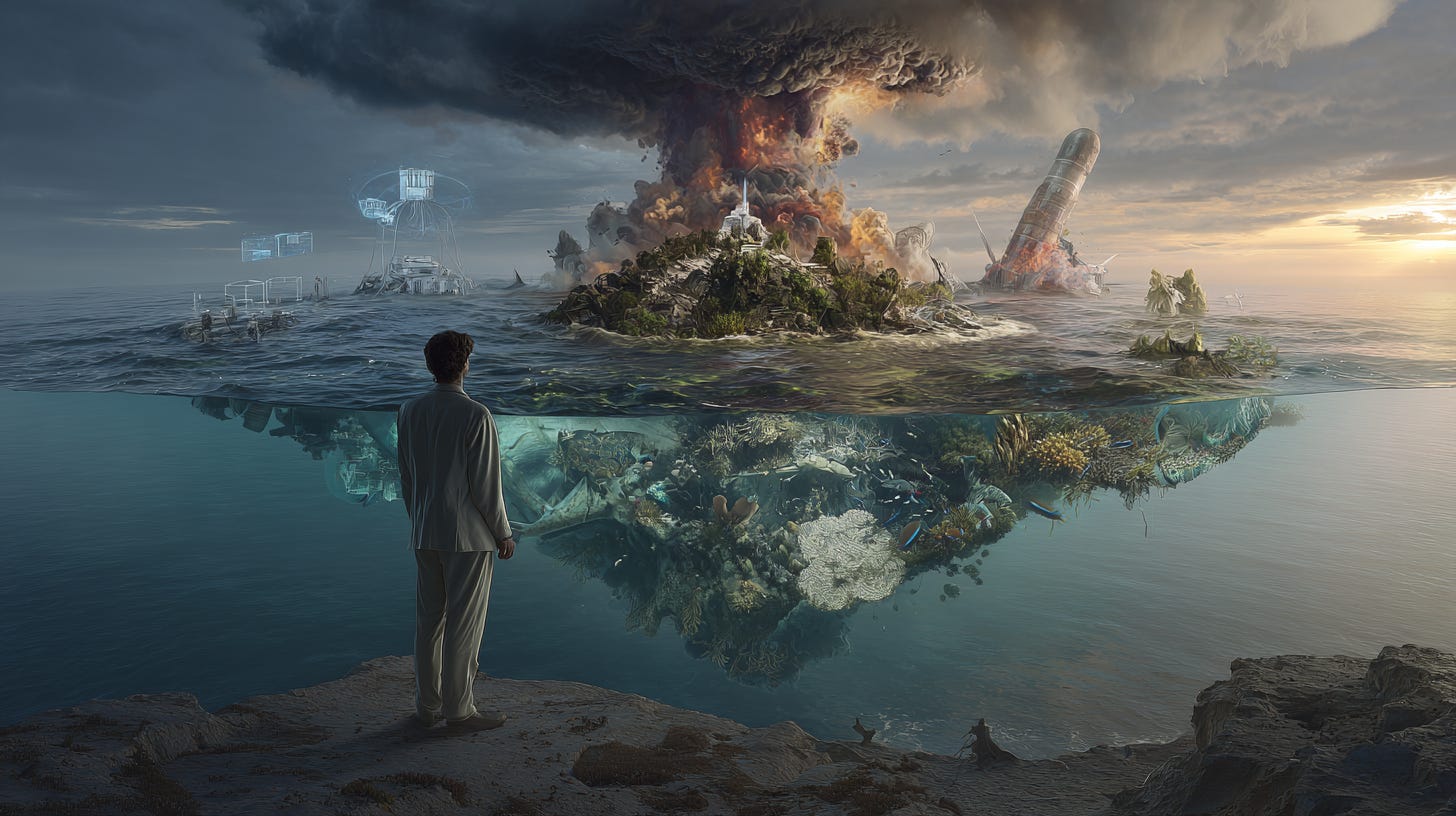
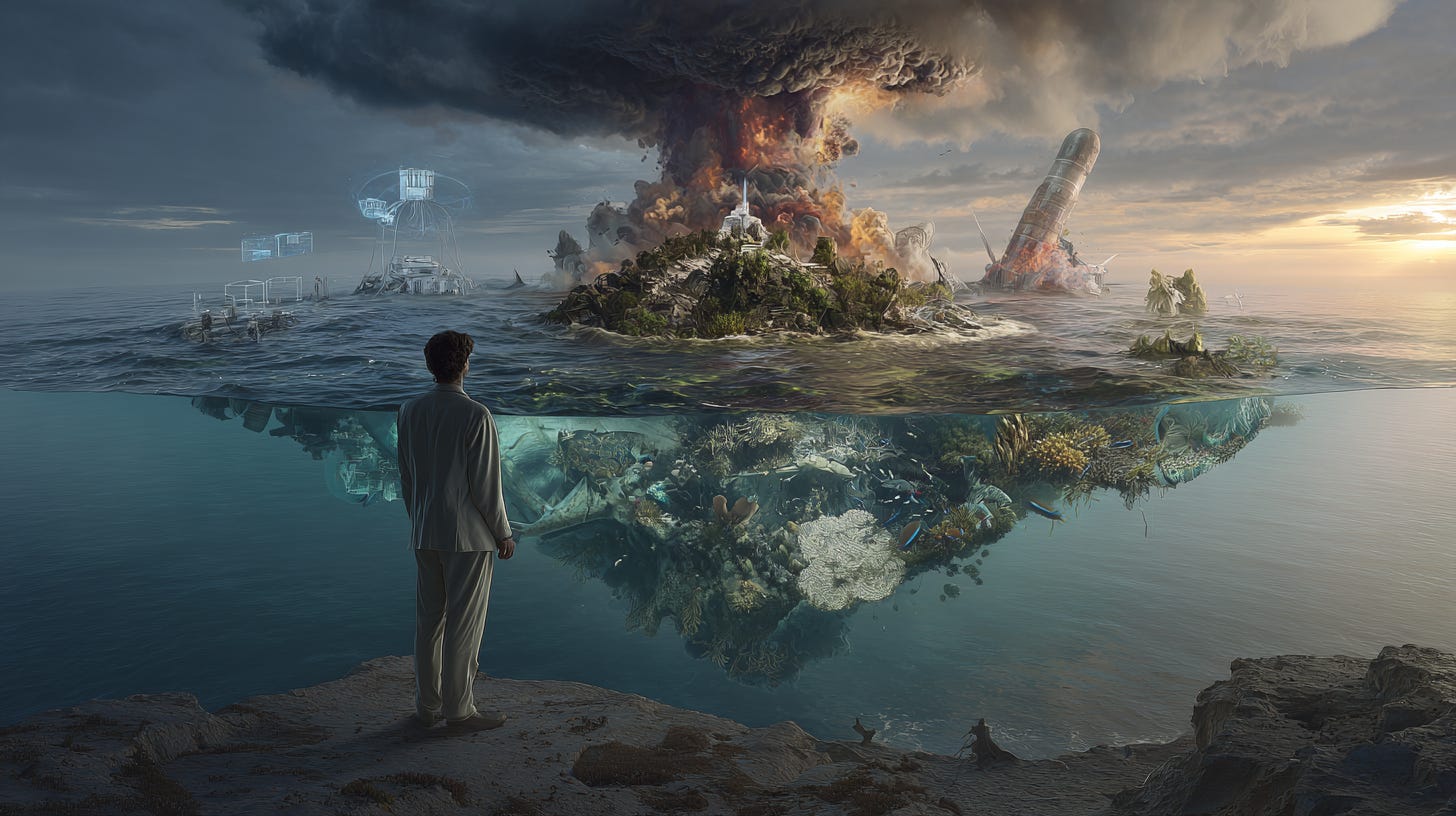
Imagine your awareness as a vast ocean. The crises of our time, the climate reports, the political upheaval, the economic anxieties, the personal losses and disappointments, these are like weather patterns moving across the surface. Real. Powerful. Demanding attention.
But the surface is not all of you. In the ocean’s profound depths, where no storm can penetrate, ancient currents move in slow, powerful rhythms. Here lives something that remains constant whether the surface is calm or chaotic: your fundamental belonging to life itself, your awareness that precedes and outlasts every circumstance.
The surface waves are real, and they deserve your thoughtful attention and response. But they are not the whole of us. And when I can feel both simultaneously, the urgency of the surface and the steadiness of the depths, something shifts. I find I can respond to life’s storms from resourcefulness rather than reactivity, from choice rather than compulsion.
The practice is simple: when you feel overwhelmed, pause. Take three conscious breaths down into your belly. Feel your feet on the ground. Ask yourself: “What else is true right now, besides the things I’m afraid of?” You’re not denying the fear. You’re refusing to let it eclipse everything else.

Seven Doorways Into a New Relationship with Uncertainty
Shifting our relationship with the unknown is not a single decision but a daily practice. Here are pathways I’ve found useful, offered not as prescriptions but as invitations to experiment.
Shrink the time horizon. Much of our suffering comes from trying to know what cannot yet be known. Instead of asking “What will the world look like in ten years?” ask “What is true right now? What is being asked of me today?” The present moment is the only place where action is possible. When you catch yourself catastrophizing about distant futures, gently return to the only time that exists and bring someone you love to your heartmind.
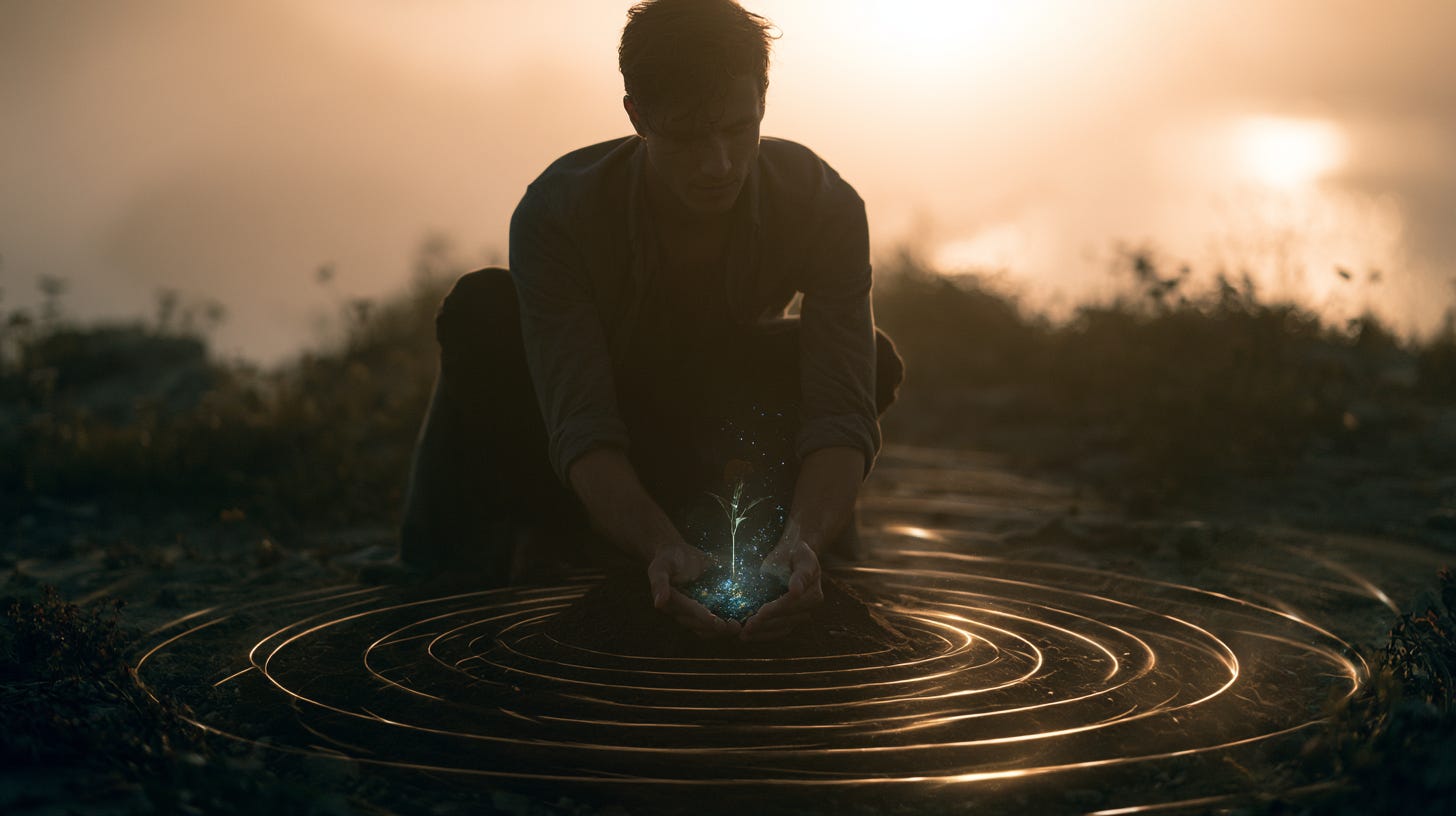
Distinguish your circles. Draw two circles, one inside the other. In the outer circle, place everything you’re worried about. In the inner circle, place only what you can influence today. Give the outer circle no more than fifteen minutes of your attention. The rest goes to the inner circle, where action transmutes anxiety into agency. We cannot control global events. We can control how we show up for the people we’re with.
Befriend small uncertainties. If the big unknowns feel overwhelming, practice with smaller ones. Take a different route to work. Try a cuisine you’ve never tasted. Have a conversation with someone whose views differ from yours. Each small encounter with the unfamiliar builds the neural pathways for meeting larger uncertainties with curiosity rather than dread.
Create islands of stability. Antifragility doesn’t mean living in constant chaos. It means having a stable foundation from which to engage with instability. Establish rituals and routines that anchor you: a morning practice, a weekly gathering with loved ones, a daily walk in nature. These are not retreats from reality but launching pads for meeting it in a new expression.
Move from probability to possibility. Instead of asking “Is there going to be a disaster?” (which is a yes/no question that triggers fear), ask “What is the range of possibilities, and what might I do?” This shifts the problem from your amygdala (threat detection) to your prefrontal cortex (creative problem-solving). You move from helpless victim to active agent.
Cultivate the ancient certainties. When the technosphere feels unstable, ground yourself in what philosophers call “Lindy” things, patterns that have persisted across millennia precisely because they serve something essential in human nature.
Movement
Time in nature
Preparing food with your hands
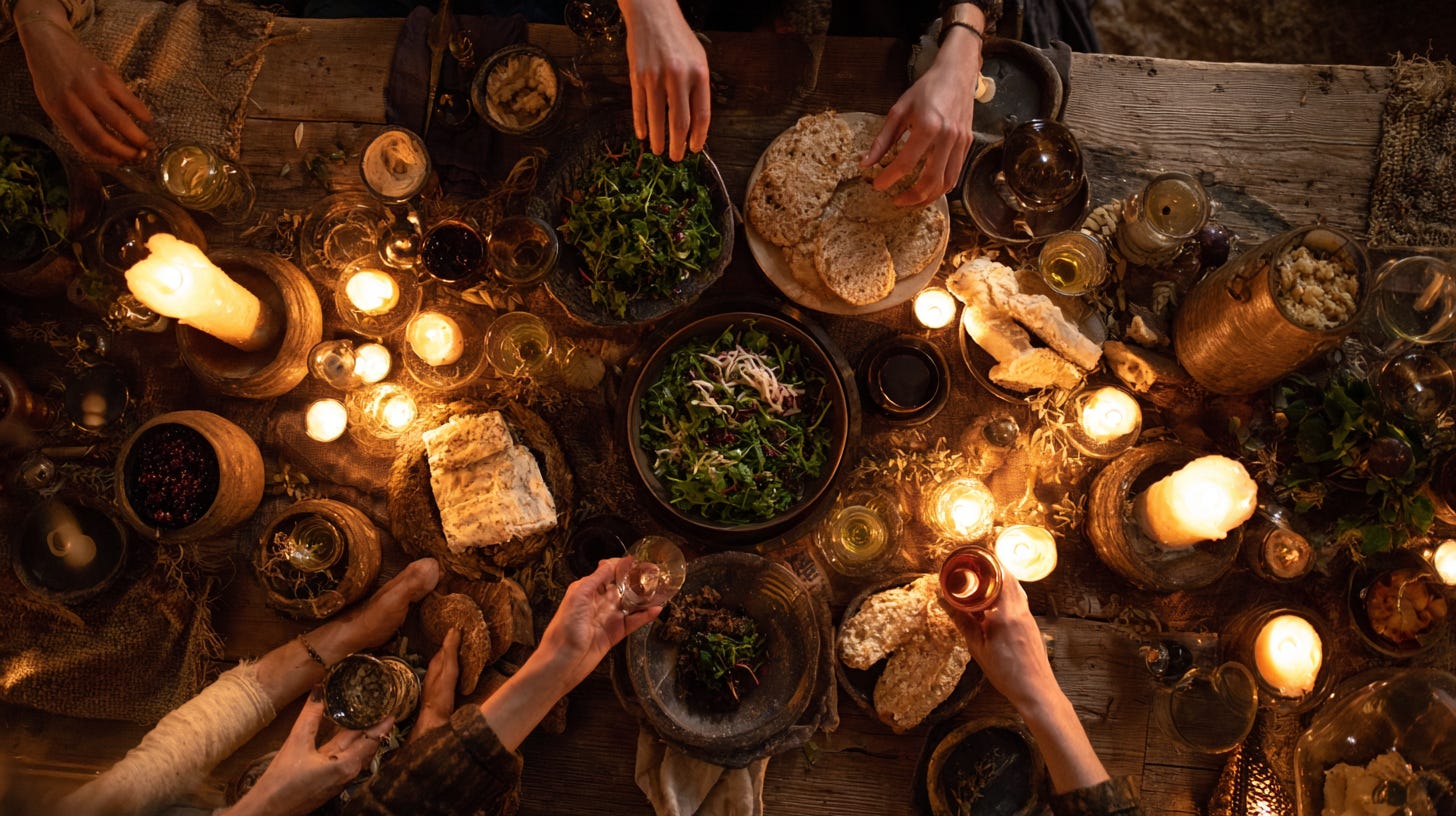
Gathering with people you love
Silence
These have carried humans through every upheaval in history. They will carry us too.
Find your people. Uncertainty is infinitely more bearable when you’re not facing it alone. Seek out others who are navigating the same threshold, not to commiserate or catastrophize together, but to remind each other of what remains possible. Communities that can hold both truth and hope become sanctuaries in chaotic times.
The Radical Act of Remaining Present
“Peace is not the absence of conflict, but the ability to cope with it.” — Mahatma Gandhi
Perhaps you’ve felt it: that subtle pressure from others when you speak of gratitude amidst chaos, when you emanate joy while tragedy unfolds, when you choose presence over panic. The questioning looks that seem to ask: “How can you be happy when the world is burning?”
Here is what I’ve learned: your peace is not indifference to suffering. It is the very thing that allows you to keep showing up when others have burned out. Cultivating joy is not an act of privilege. It is an act of rebellion against a culture that mistakes despair for depth and suffering for solidarity.
When you can feel the world’s pain without losing access to your own aliveness, you become part of the healing the world desperately needs. Your equanimity is not abandonment of those who suffer. It is the lamp oil that keeps the flame of empathy burning bright without burning out.
When others question your capacity for hope, try offering this: “I feel the grief with you. And I am also sensing a deeper capacity in us that isn’t destroyed by grief. Touching that source helps me stay resourceful so I can keep showing up for what matters.”
My New Year’s Message
As we step across the threshold into 2026, I leave you with this: the paradigm shift we are living through is not only a collapse of the old. It is simultaneously a birth of a new expression. Every ending is also a beginning. Every crisis an invitation.
I don’t know exactly what world we are moving toward. No one does. But I know that the people who will navigate it best are not those who cling most tightly to what was. They are the ones who learn to move with what is. Those who discover that the capacity to remain centered in chaos is itself a form of profound action. Those who find that uncertainty fully met are not enemies but teachers.
You are not alone in this threshold moment. Across the world, millions are waking to the same recognition: that the old ways are ending and new ways are being born. Each of us has an essential role to play in shaping what emerges. The transformation happening in the world is also the transformation available to us all.
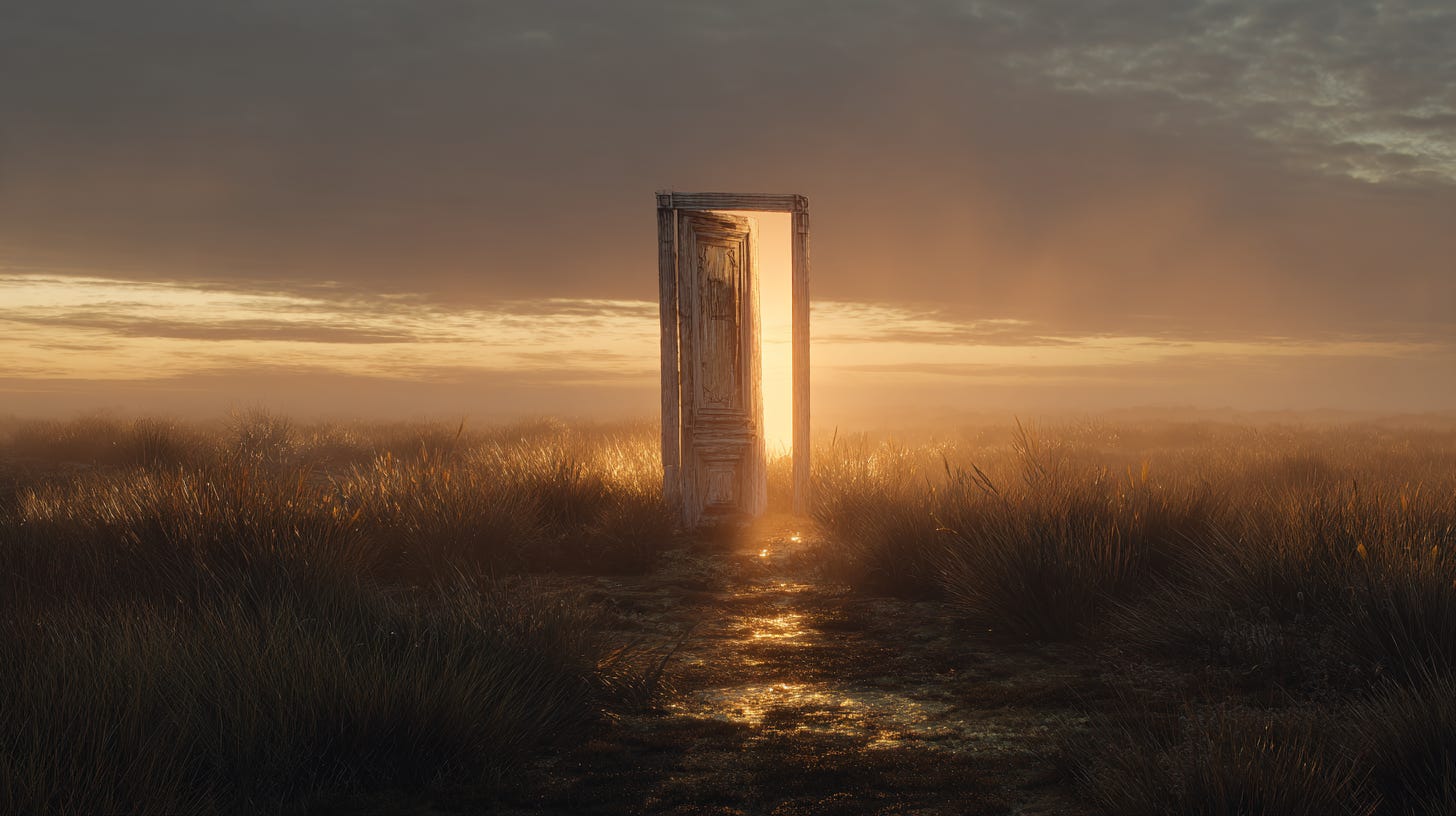
May you find your rest in the deep currents. May you meet the surface storms with both urgency and peace. May you discover that the very uncertainty that has been keeping you awake at night is also an open doorway into becoming who you were always meant to be.
“The cave you fear to enter holds the treasure you seek.” — Joseph Campbell
The world needs your light. Not dimmed out of false solidarity with suffering, but burning bright as a beacon for what remains possible when consciousness and love unite with a mystery greater than our individual selves.
Here’s to the threshold. Here’s to the fear that teaches. Here’s to what we will become together.
In reverence for the journey ahead,